
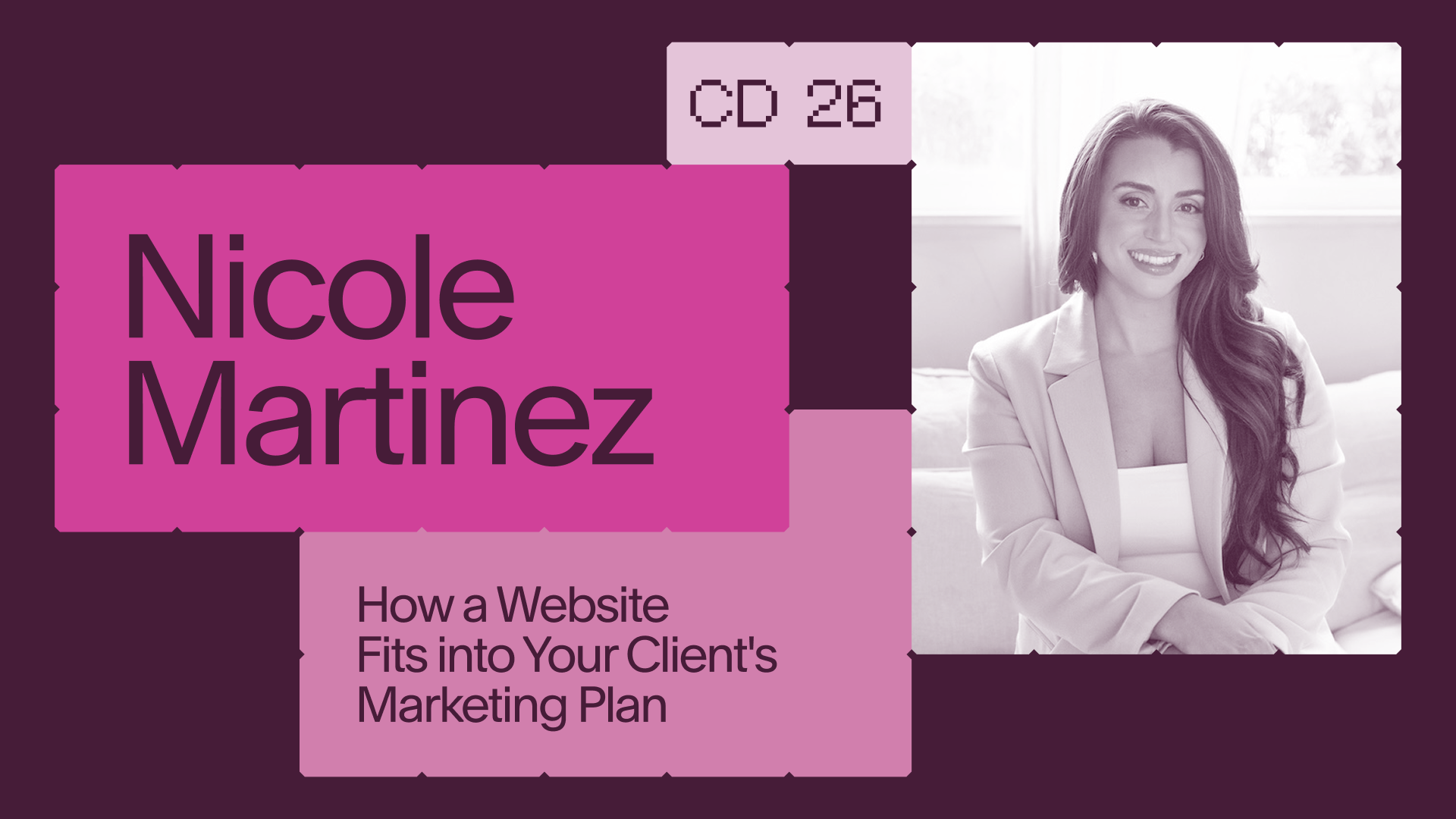
Yes, AI can build pages, assemble layouts, and write copy. No, it can’t replace the unique experience and strategic perspective web designers bring to the table. At Circle Day 2026, Circle partner Nicole Martinez shared how evolving from designer to strategic partner has helped her write stronger proposals, build more effective websites, and charge more for the value of her work.
In marketing, nothing works in isolation. Every marketing channel has a job, and each should help move the customer close to a sale. If a client hasn’t thought through how those pieces work together, you can help them see the bigger picture—and define their website’s role in it.
Nicole outlined her four-step working website framework, sharing questions you can use to lead discovery conversations and offer your strategic guidance from day one:
The Job: What must this site do?
Start by asking what one thing the website needs to produce: inquiries, booked appointments, or product sales, for example. Then ask what it isn’t responsible for. A clear primary goal helps determine which offer should lead, how pages should be organized, and which calls-to-action (CTA) deserve the most attention. As Nicole put it, “A website that’s assigned every single job gets nothing done.”
The Journey: Where do visitors come from?
Ask where site visitors come from, what they already know or believe they know about the business, and what might make them hesitate to take the next action. The website should continue the conversation that brought them there, not restart it. Understanding that conversation helps you determine what visitors should see first and what else they need to know to move down the funnel.
The System: Where does the lead go next?
A website’s job isn’t finished when someone fills out a form. Where does the lead go? Who follows up, and how quickly? What happens if that person doesn’t book or purchase? Understanding the systems that support—or don’t support—the website helps you identify what the project should include. It can also highlight opportunities for continued strategic support post-launch.
The Action: What's one clear decision on each page?
After the call, use what you’ve learned to outline the primary decision each page helps a customer make. A page can have secondary CTAs, but its main job should support the website’s primary goal. If it doesn’t, consider whether it belongs in the first place. Removing a page often creates a clearer path for the customer.
This framework can help you create a proposal that shows your client they’re not just investing in a website—they’re investing in a strategy and a partnership. When AI can produce a polished page quickly, clients have even more reason to value the person who asks the right questions and knows what to do with the answers. (That’s you.)
Related resources:
Want more?
Join Squarespace Circle, Squarespace’s program for professional designers and web design agencies. Along with exclusive content, discounts, and other perks, Circle brings experts together from across the globe to exchange advice while connecting with new clients and collaborators.
