
Squarespace Circle:
State of the Web Design Industry 2026

Unleashing the power of human creativity
This year, we’re highlighting the many ways the global Circle community—made up of web designers, developers, SEO experts, graphic designers, copywriters, brand specialists, and more—embraces their creativity to work and win for their clients and businesses.
We surveyed over 1,000 Circle partners from more than 20 countries, and across their responses, one sentiment stood out: a resounding pride in what makes their work uniquely human.
In this report, you’ll learn:
What inspires web designers
The ways Circle partners use (and feel about) AI
Today’s top challenges faced by web designers
Why human connection continues to set designers apart, even as AI becomes more widespread
You’ll also hear directly from Circle partners who shared, in their own words, what they believe AI simply can’t replicate.
Creativity in the age of AI
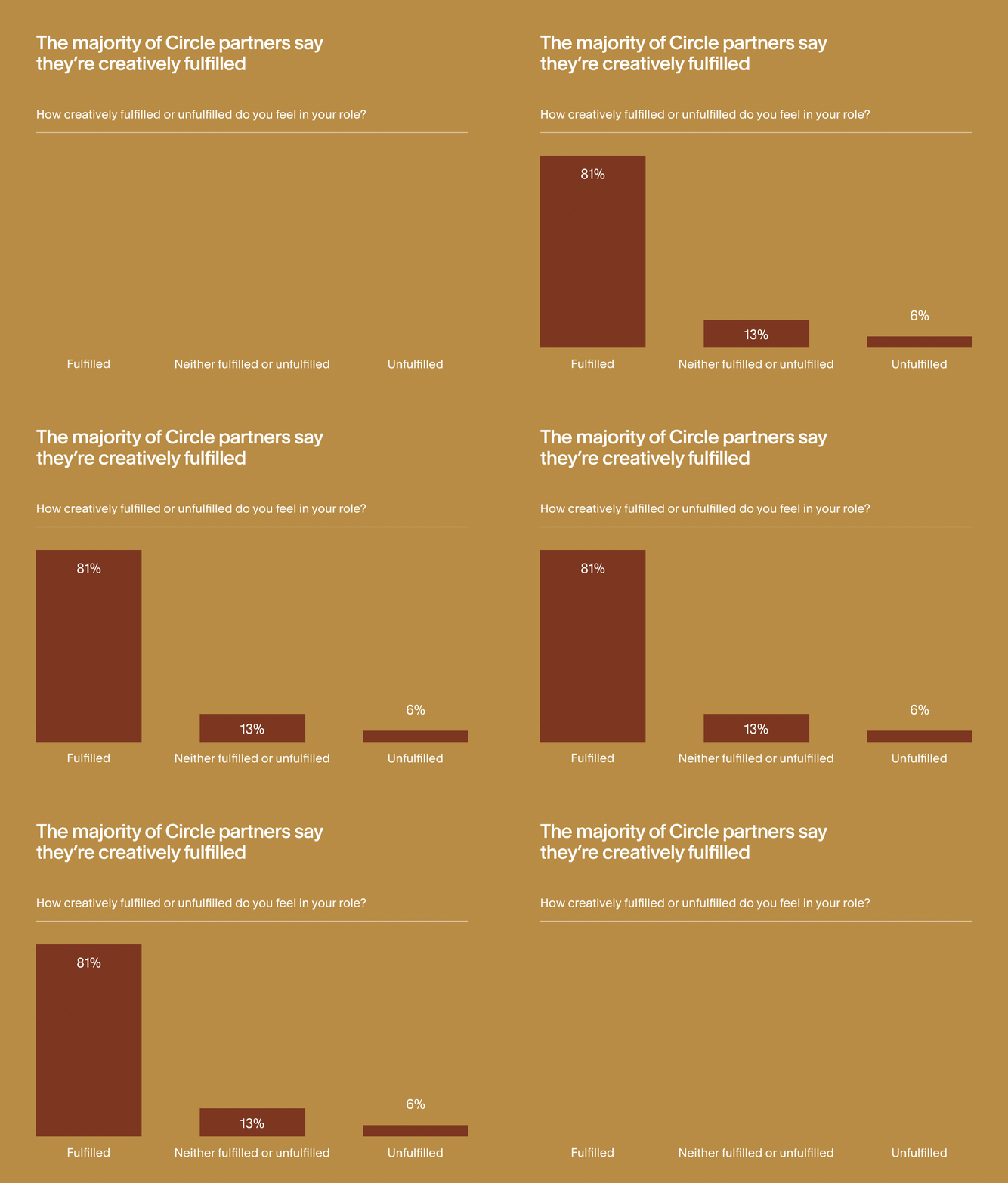
81% are creatively fulfilled, and AI-assisted creatives feel it even more
Even as AI becomes more present in web design (more on that next), Circle partners continue to feel deeply connected to their work.
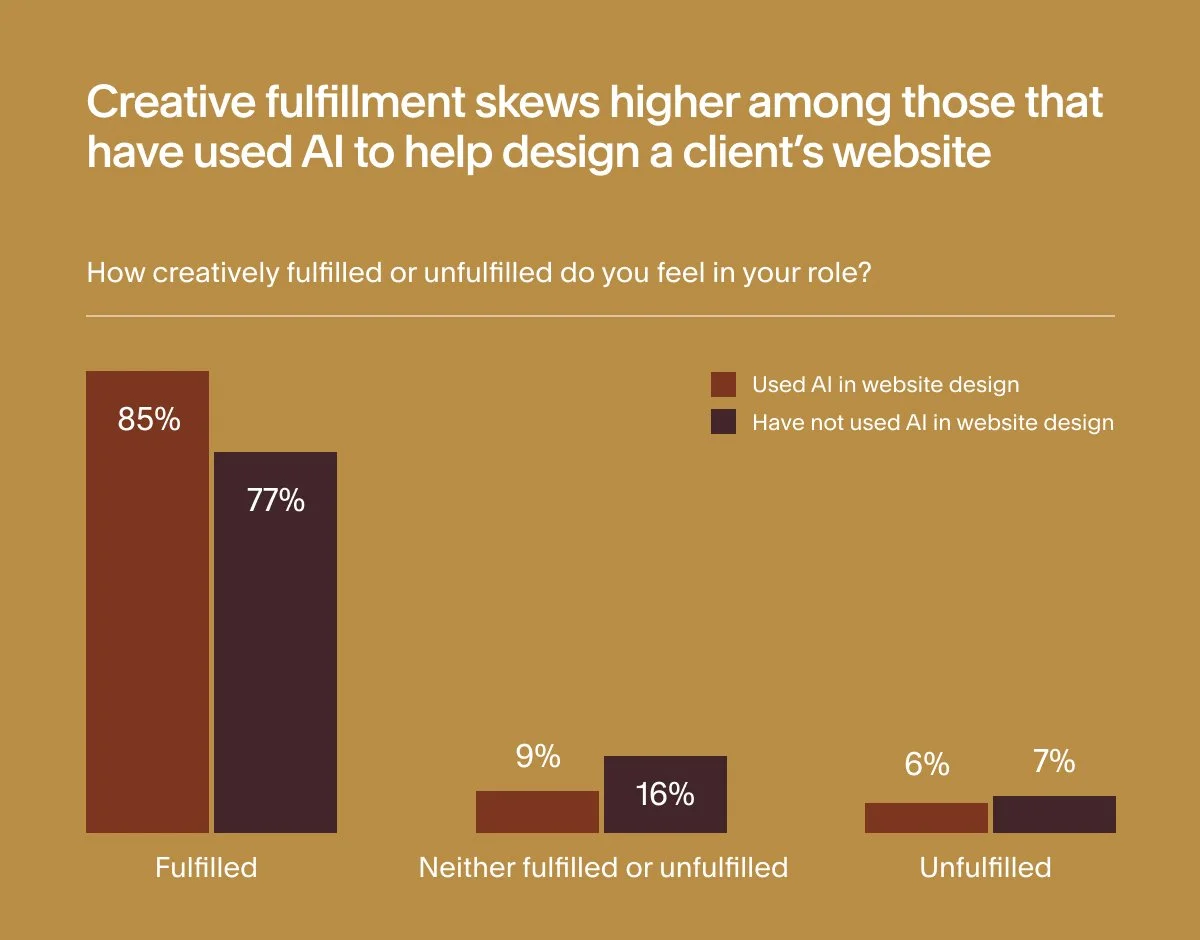
Eighty-one percent say they feel creatively fulfilled, and notably, those who’ve used AI tools to help build clients’ websites report even higher levels of fulfillment than those who haven’t. In other words, using AI tools to support their work doesn't seem to reduce creative fulfillment for web designers.
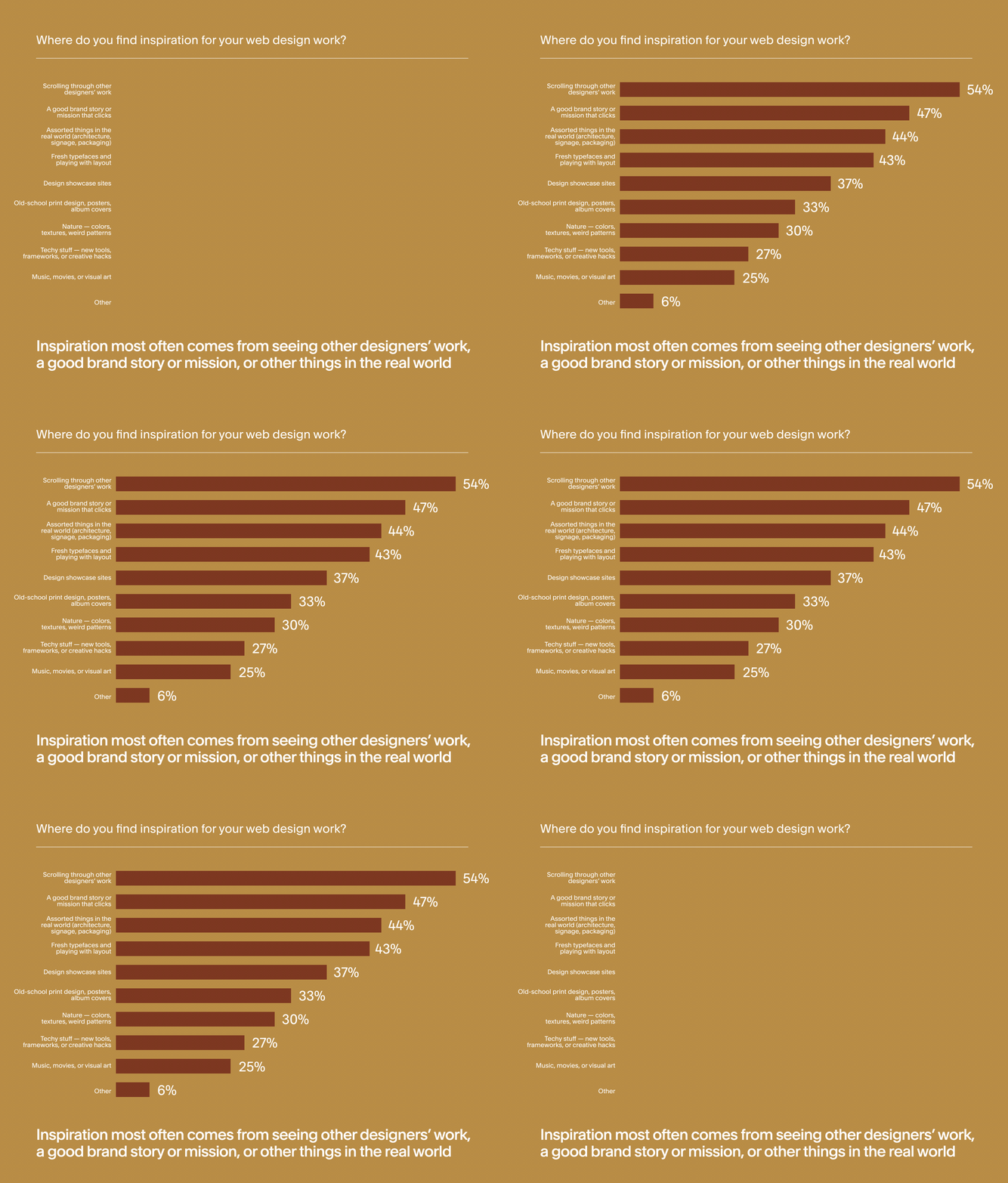
Respondents most often look to their peers, clients, and everyday surroundings to spark creativity—a reminder that even in a digital world, the most meaningful sources of inspiration are often human or rooted in the physical world.
54% are inspired by scrolling through other designers’ work
47% get inspiration from a good brand story or mission that clicks
44% find inspiration in assorted things in the real world (architecture, signage, packaging)
What in your work will AI never be able to do better than you can?
“Creativity cannot be replaced”
“Create art and design with originality. Create images that connect becasue [sic] of their imperfections and human touch.”
“Understand human connection, my design usually comes from the personality of the client and how the website needs to 'feel', colour palettes often come out of my inspiration from meeting them, spotting clothing, interiors, art that they love, that they would never have thought of using, things not part of the brief but born out of intuition and connection with the client in their environments.”

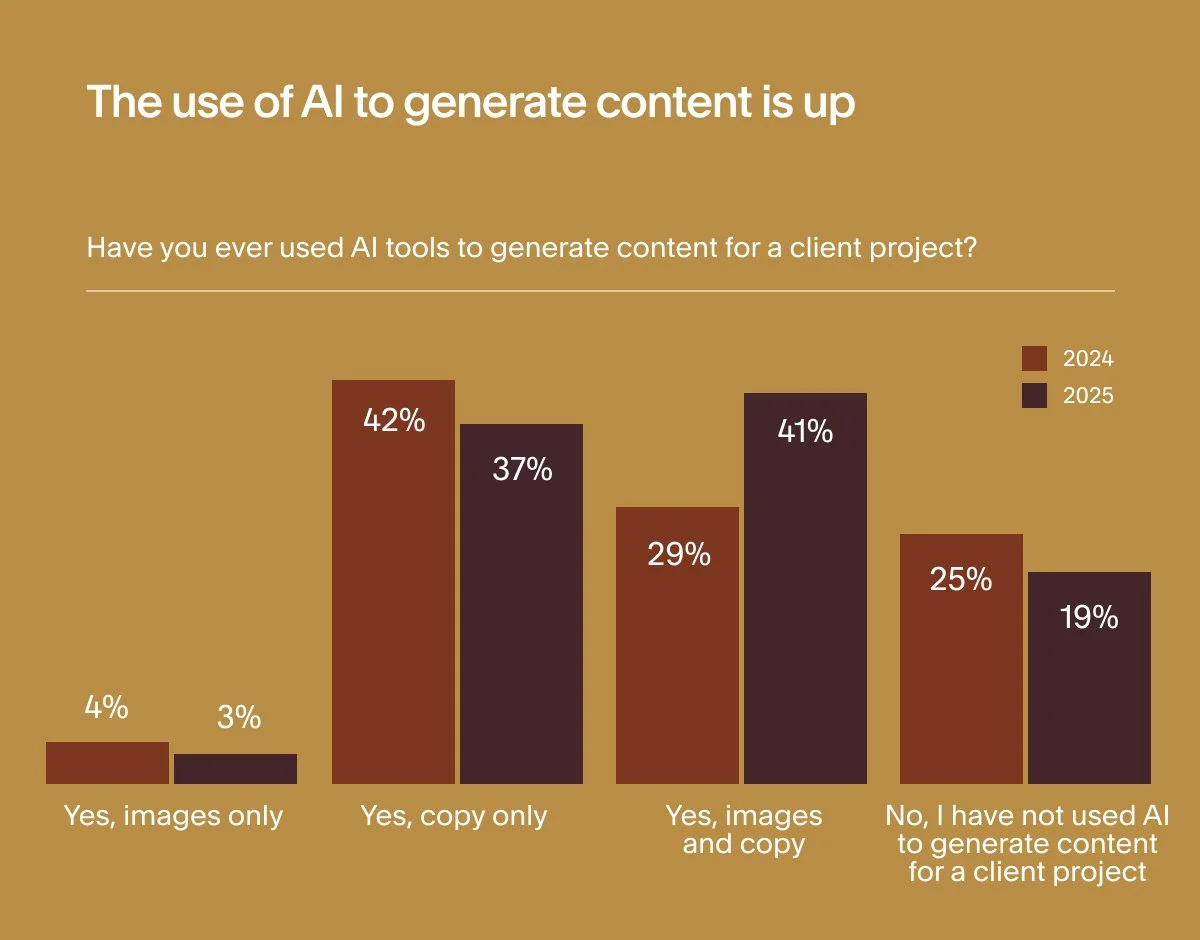
Today, more designers are creating content with AI…
88% who used AI to help build client sites say it made a positive impact
Circle partners are using AI for content creation (images and/or copy) more than they did last year (81% in 2025, up from 75%). Nearly half (46%) have used AI tools to help build websites, while over a third (39%) have used them to improve client SEO.
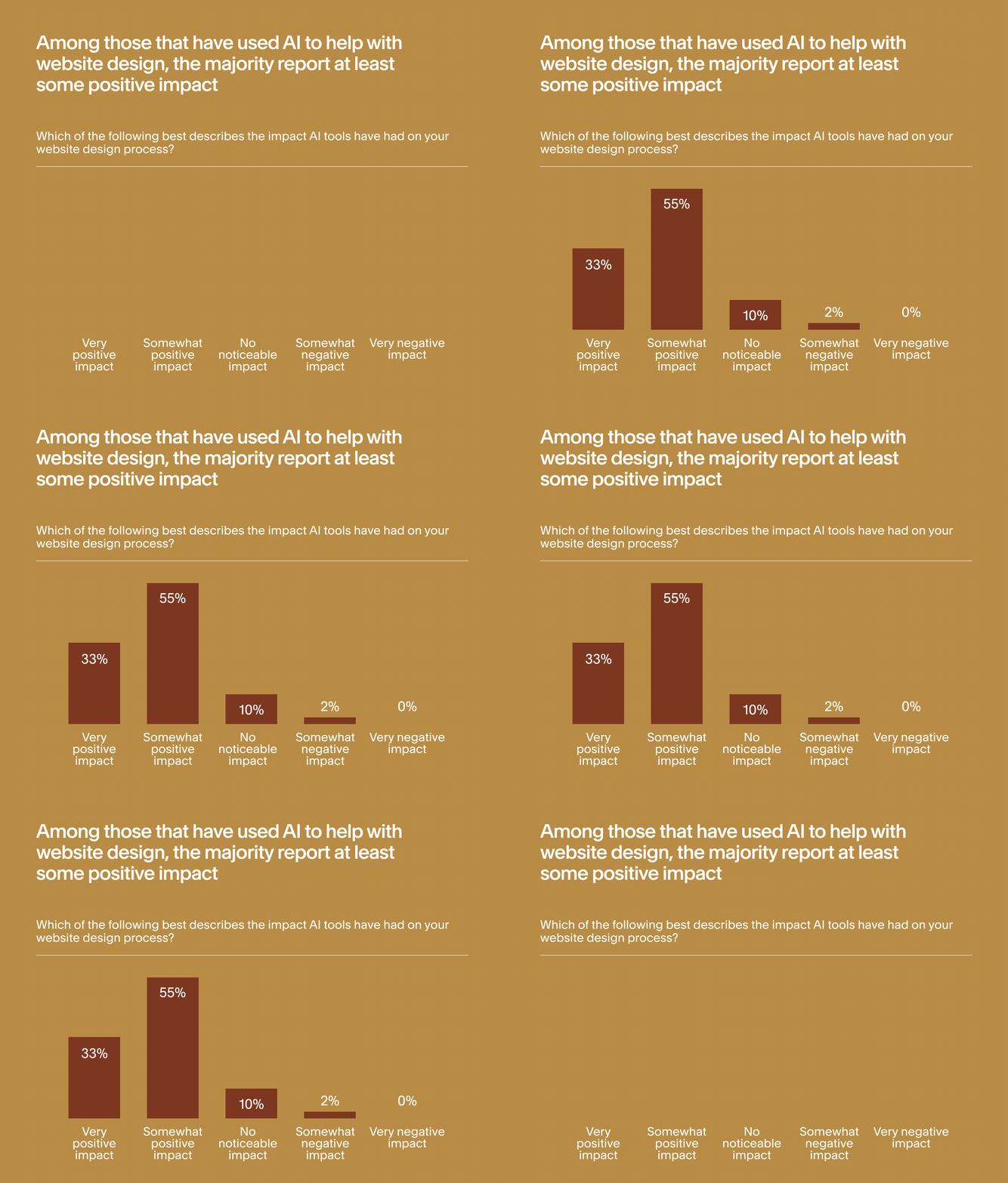
Designers who’ve adopted AI to help build websites for clients see the benefits: an overwhelming majority (88%) report a positive impact on the web design process.
What in your work will AI never be able to do better than you can?
“I don't think AI will be able to think outside the box and come up with new trends and way to display content.”
“I tried using AI in my copy, and for generic content, it works. For pages that need emotion, story, and depth, I generally write this myself, and then have AI clean it for me.”
“Think and act like a human. AI can't read the room. It can not pick up on body language or vibe. I think AI can be helpful, make things easier within our work process and handling what can be automated, but it can’t actually replace the human experience.”
But feelings around AI are still mixed.
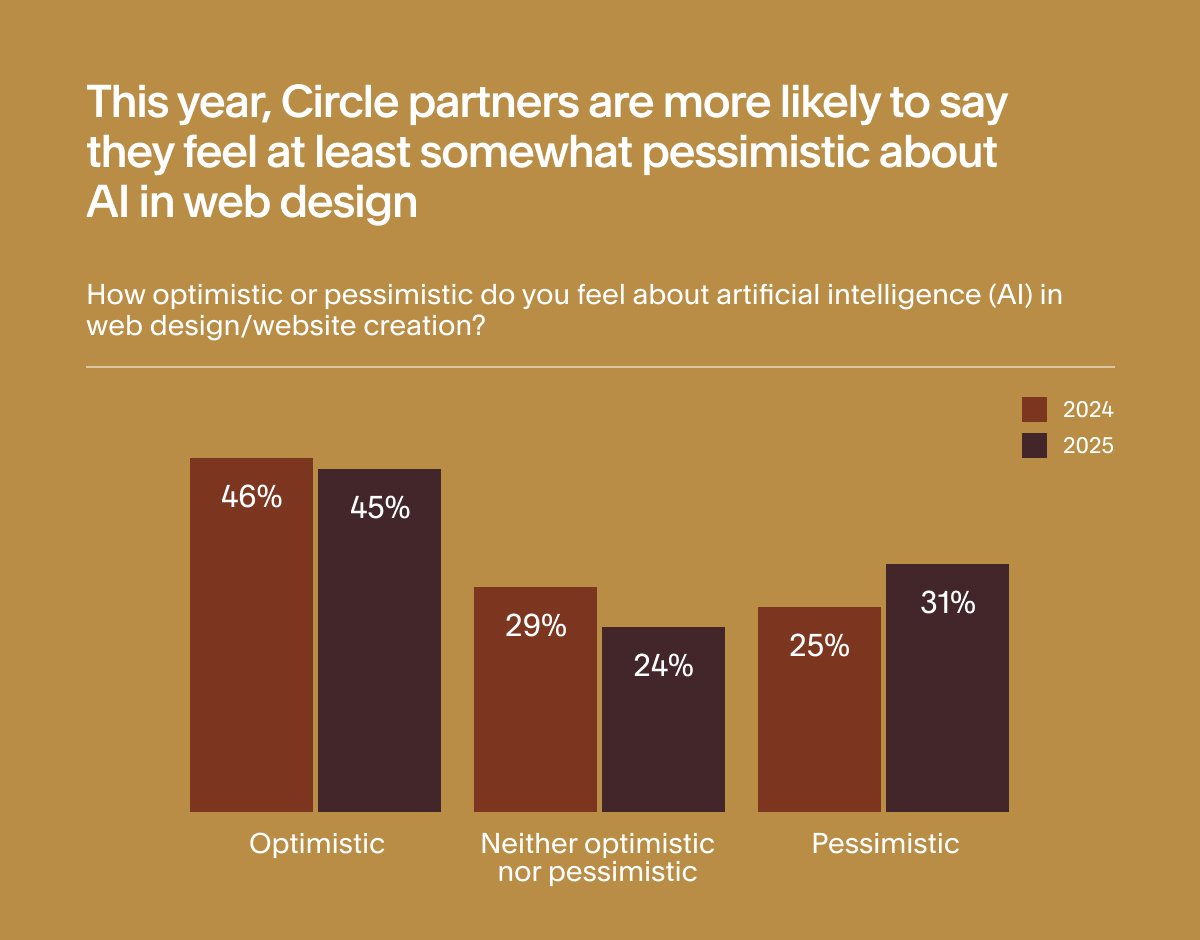
After another year of being bombarded by everything AI, fewer Circle partners find themselves on the fence about it. More are likely to say they’re somewhat or very pessimistic about the role of AI in website creation.
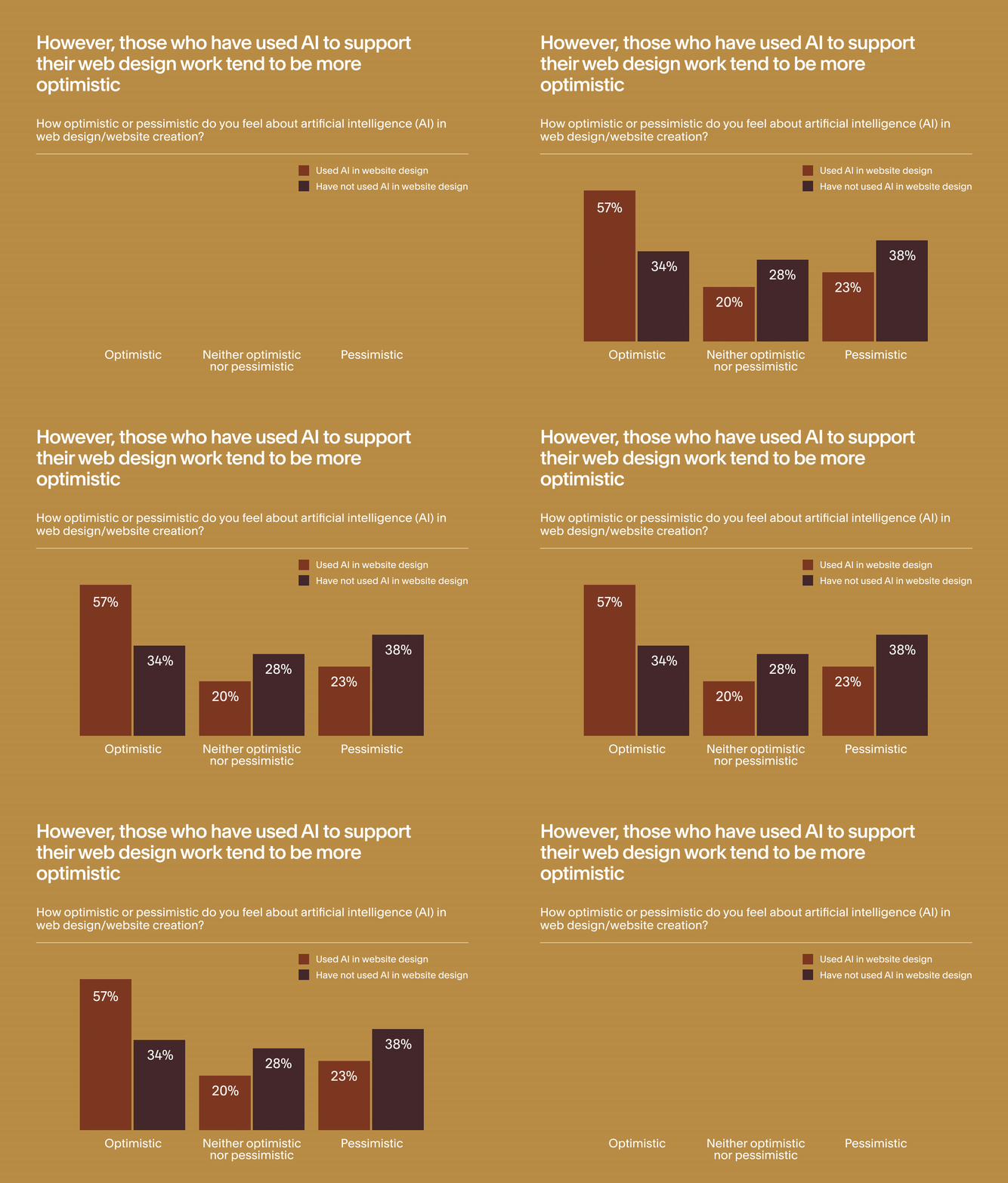
Notably, though, those who have used AI to support their web design work tend to be more optimistic about it. Ultimately, those who feel comfortable with AI continue to see its opportunities, while those who are unsure have become increasingly hesitant.
What in your work will AI never be able to do better than you can?
“My website clients are psychotherapists - AI can't feel anything, make intuitive decisions, or understand the soul of a therapist and their brand. I can translate a therapist's emotions and lived experience. AI will replicate bias without recognizing it; whereas I have values, awareness, conscience, and lived experience to draw from, which helps me reduce bias. Also, AI doesn't care if a therapy client feels seen, which is at the heart of what I design.”
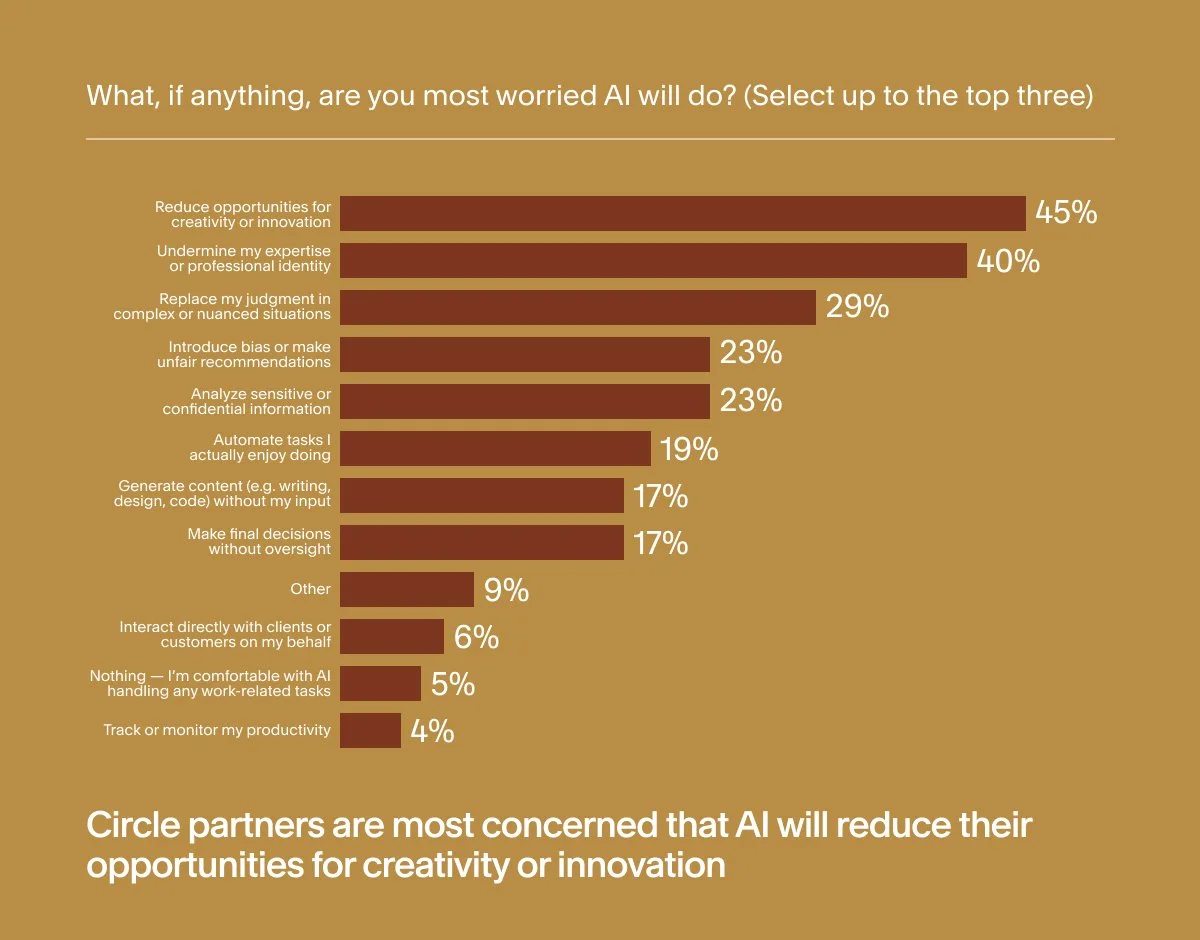
Respondents' biggest concerns are what could be lost along the way.
Circle partners worry AI could:
Reduce opportunities for creativity or innovation (45%)
Undermine their expertise or professional identity (40%)
Replace their judgment in complex or nuanced situations (29%)
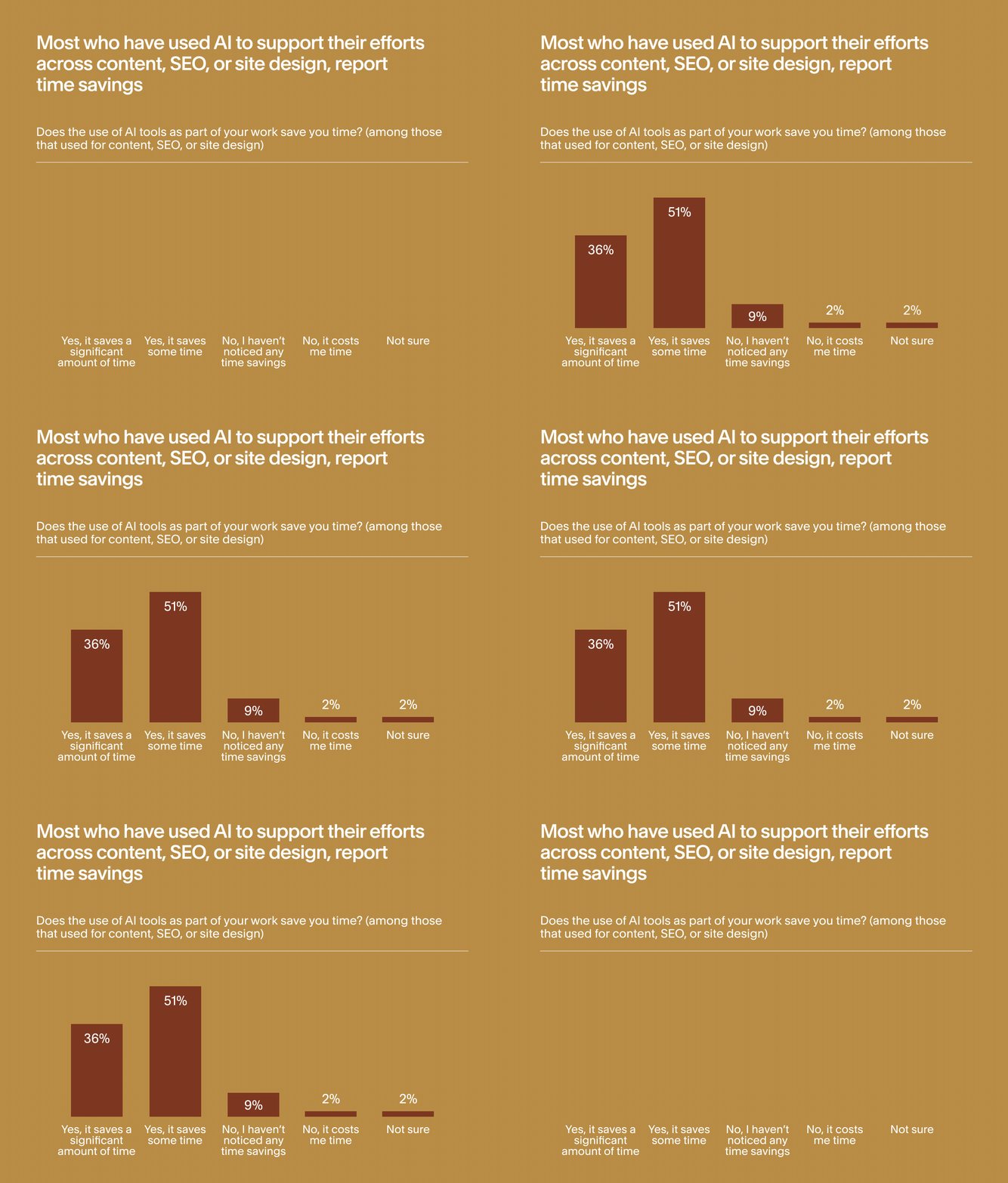
And yet, the time savings are clear.
87% of AI users report saving time
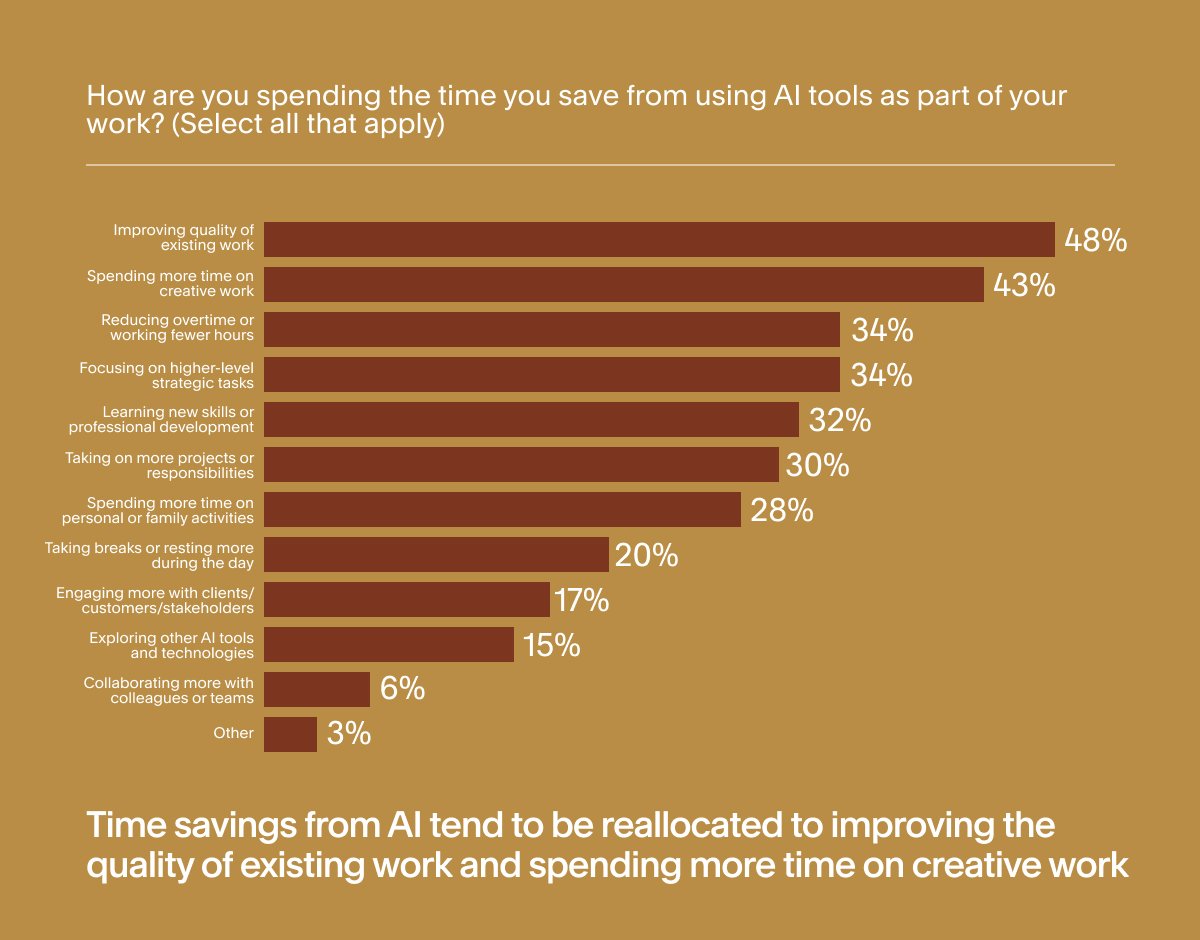
Despite broader industry concerns about AI’s impact on creativity, AI users say it actually frees up more time, space, and capacity for the creative work they value most.
AI users say the time they save allows them to:
Improve quality of existing work (48%)
Spend more time on creative work (43%)
Reduce overtime or work (34%)
Focus on higher-level strategic tasks (34%)
What in your work will AI never be able to do better than you can?
“AI can generate layouts and suggest best practices, but it can't replicate the human intuition, empathy, and relationship-building skills that turn good design into transformative user experiences.”
“I love the time-saving aspect of using AI tools - the clients don't mind how they get an excellent website but [they] still need a human who can wield the tools, and [they] always want to deal with a real person who gets on the phone.”
Let’s talk money: how much did designers charge and make?
US-based pros using AI to help design sites report 21% higher average annual revenue than those who aren’t using AI in this way.
Understanding how web designers work is only part of the story. The other part is how that work pays off. Respondents shared both their lowest and highest site project rates over the past year, offering a snapshot of their earnings.
And yes, the impact of AI shows up in the numbers here too. US-based web designers who’ve used AI to help build client websites reported 21% higher average annual revenue than those who haven’t.
The number one challenge web designers face
As long as we’ve been asking, Circle partners have said their top challenge is finding new clients. This year, scope creep and setting prices are close behind.
Top challenges for designers:
Finding new clients (47%)
Dealing with scope creep (37%)
Pricing my services (31%)
So, why is finding new clients so difficult? It’s a catch-22. Circle partners are too busy doing work for existing clients to find time to go out and get more of it. We see this as a potential area of opportunity for AI—whether that’s automating email campaigns, generating copy for paid ads, or supporting other marketing tasks.
Biggest barriers to getting new clients:
Too busy working on client projects (37%)
Not enough brand awareness (31%)
Only working with particular platforms (21%)
Human connection above all else
AI doesn’t have to replace creativity, it simply creates more opportunity to focus on deeper conversations, sharper strategy, and more meaningful client collaboration. And while AI use is on the rise for tasks like content creation, only 5% of respondents say they’re “comfortable with AI handling any work-related tasks.” For most, trust, taste, and creative judgment are uniquely human strengths.
What in your work will AI never be able to do better than you can?
“I am able to build relationships and offer a perspective beyond a prompt.”
“From an artistic standpoint, I feel like AI can never fully replace the human aspect of handmade creating art, illustrations, the beauty of an actual photo vs artificially created.”
The future is human
The future of web design is full of possibility and promise. Creative professionals will continue to shape the industry with originality, and with the deep understanding and empathy that make successful projects possible.
And as Squarespace expands to offer Squarespace for Pros, a suite of new tools to simplify day-to-day tasks and website builds, designers can devote more time to unleashing their creativity in ways only humans know how.
Share your takeaways from the report with fellow Circle partners on the Circle Forum.
What in your work will AI never be able to do better than you can?
“Be me, of course. And as I wrote this, who knows. Maybe there will be AI that can create work like me in ten years but it will lack my essence, my signature and it will be flat. I don’t want to live in a flat world. Do you?”
Grow with Circle
Squarespace Circle brings together a global community of creative professionals looking to level up their web design businesses. Circle partners get access to exclusive content, referral payments and discounts, priority support, extended trials, and more. Learn from and connect with other pros.
Survey method
This random double-opt-in survey of 1,034 web designers was conducted by Squarespace’s internal research team from November 6 to November 18, 2025. This was a 10-minute survey, with respondents from more than 20 countries.