Designing Websites for the Future with Glassmorphism
Web design is continually trending toward premiumization, as designers and developers reach for creative ways to engage audiences by building more dynamic, personalized experiences that feel elevated and intentional. From 3D graphics to sophisticated animations and every pixel in between, new design trends are driven by evolving visitor expectations for websites to deliver improved functionality and accessibility.
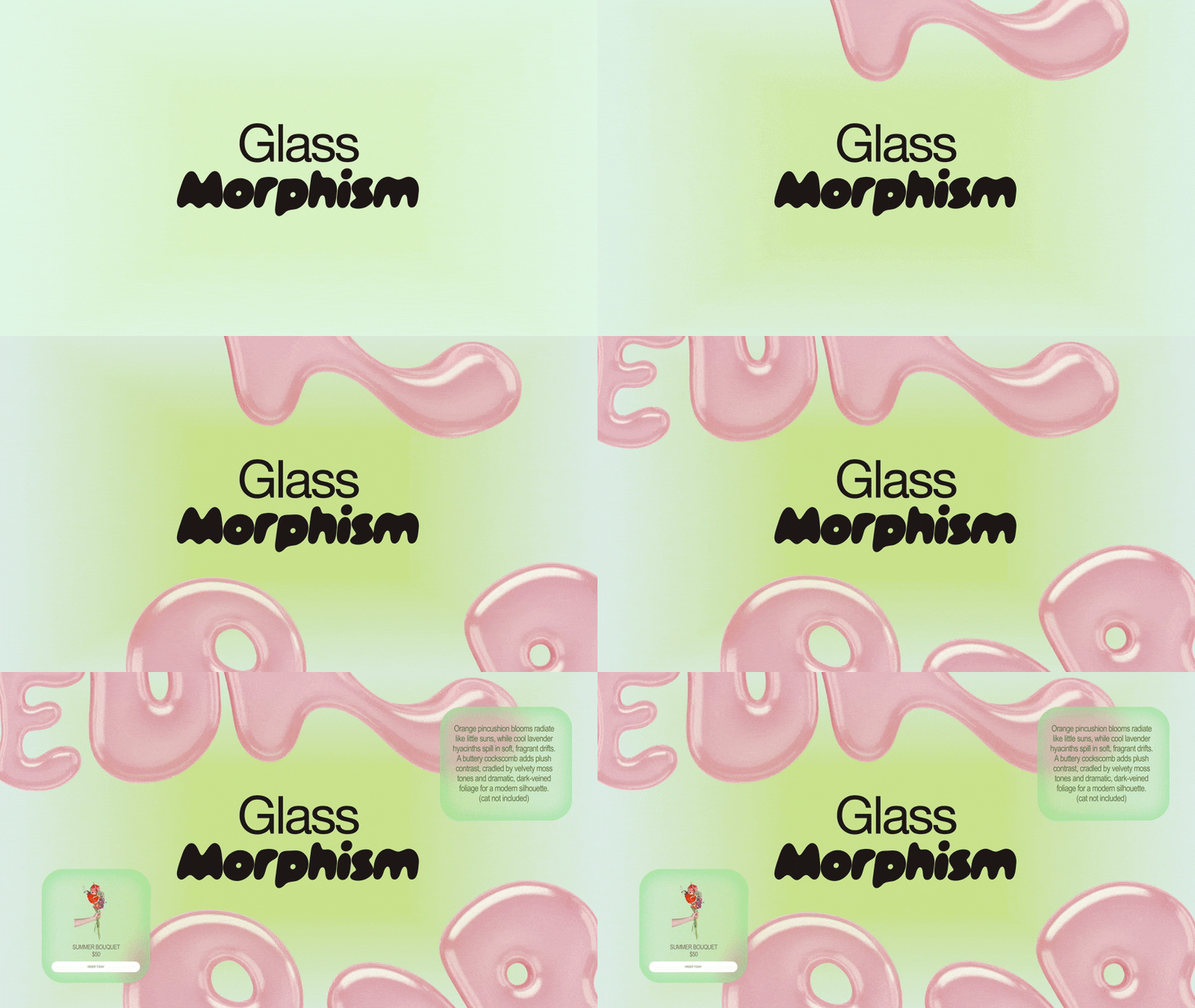
One trend that embodies the zeitgeist is Glassmorphism. This design style incorporates various degrees of translucency to simulate depth and create contrast between the foreground and background user interface (UI). The effect is like a pane of frosted glass, an opaque layer typically taking the form of an element like a text or image block, button, or menu item to pull the visitor’s focus toward content that appears to be floating in front of a color gradient or busy section background. Circle partner and ilovecreatives founder Puno helped identify Glassmorphism as one of the most prevalent trends web designers can expect to see in 2026.
A window into Glassmorphism
The Glassmorphism aesthetic relies on two distinct features—transparency and blur—to set up a sleek, futuristic design that feels tactile and dimensional in the way it organizes content on the page. Creating a Glassmorphic effect encourages visitors to “see” through an element to what’s behind it, while still clearly understanding the content or imagery contained in the element itself. The level to which you want them to perceive what’s in the background guides your use of transparency and blur.
Transparency
Translucent surfaces that give the impression of depth and dimension are trademark Glassmorphism. Let’s say you’re adding a text block to a page and want a color gradient to show through so it appears to be closer in the depth of field and grabs visitors’ attention first. You can set the blend mode of the text block to adjust how transparent the block appears.
More opacity creates a less defined background gradient; less opacity creates a more defined background. If your block contains a lot of text, or text and imagery, more opacity will make that content more legible, since the lines and contours of the gradient background won’t be as visible and interfere with readability.
Pro tip: Upload your gradient as a section background image or use section background art for added movement.
Blur
A soft blurred background of a text block creates a look similar to frosted glass: objects on the other side of the glass are visible, but their details are faintly obscured. When leaning into Glassmorphism, this effect creates subtle layers, making low-opacity foreground elements appear translucent while keeping their contents sharply defined and legible. This establishes depth on the page, with noteworthy elements like a call to action or key details appearing to hover in front of the background design.
The degree of blur you use determines how clear or out of focus the background design looks. For example, a 10-pixel blur used with a low opacity component will reveal much of the background detail, whereas a 50-pixel blur will start to mix background colors and items together and distort them.
How Glassmorphism shows up in Squarespace
There are many ways to incorporate Glassmorphism into your Squarespace designs. Here are some no-code applications to get started:
Use section background colors and images that complement the overall design but provide enough contrast to render foreground block text or imagery clearly readable.
Add strokes, soft gradients, and depth lighting to accentuate the appearance of dimension, giving blocks the illusion of thickness.
Use a soft, diffused drop shadow around the border of a shape block to augment the depth effect.
Include generous white space to add to the illusion of depth.
Keep the site modern with clean, minimalist sans-serif fonts.
Layer elements of varying cool colors, soft shapes, and sizes, calling attention to the depth and dimension produced by transparency and blur.
Lean into rounded corners on glassy elements, softening the aesthetic and creating a polished, modern vibe.
Add site-wide animations that appear on scroll—including styles like fade, scale, and slide—or section background animations to add to the Glassmorphic feel of the site.
Place blurred shape blocks behind buttons and forms to make interactive elements stand out, creating a clean, elevated visual hierarchy without overwhelming the overall design.
Add section background art or a section background image with a gradient to make the navigation and site header feel lighter and more modern.
What to keep in mind when embracing Glassmorphism
While Glassmorphism has its moment in digital and print marketing, applying the aesthetic effectively to your projects comes with guardrails. Here are a few best practices to remember:
Overuse
With any design element, too much of a good thing can be counterproductive, and the same is true with Glassmorphism. Overusing Glassmorphism throughout the website or page can result in a chaotic, disorienting user experience. Using it to ground the visual identity or highlight key elements will help you prioritize organization and clarity.
Accessibility
One of the biggest stumbling blocks to creating a site with the Glassmorphism aesthetic is ensuring content remains legible. For example, meeting contrast requirements ensures that text remains readable against blurry or gradient section backgrounds for all visitors. Also, increasing the blur level helps separate foreground content blocks from the translucent backdrop, improving readability. Learn about making sites more accessible.
A glass half full
Using Glassmorphism in web design projects calls for equal doses of creativity and moderation, capturing its modern, dreamy vibe without sacrificing usability. Applied in the right places, it can bring a futuristic gleam and added dimension to everyday elements like text, navigation bars, and buttons. Take it too far, and the site’s organization and legibility could turn into a glass house, all windows with no doors to invite users in. When used thoughtfully, Glassmorphism creates a forward-looking, ethereal aesthetic that can add depth, focus, and visual interest to web design.
Read about more 2026 trends in web design:
Want more?
Check out Squarespace Circle, Squarespace’s program for professional designers and web design agencies. Along with exclusive content, discounts, and other perks, Circle brings experts together from across the globe to exchange advice while connecting with new clients and collaborators.