
2026 Web Design Trends
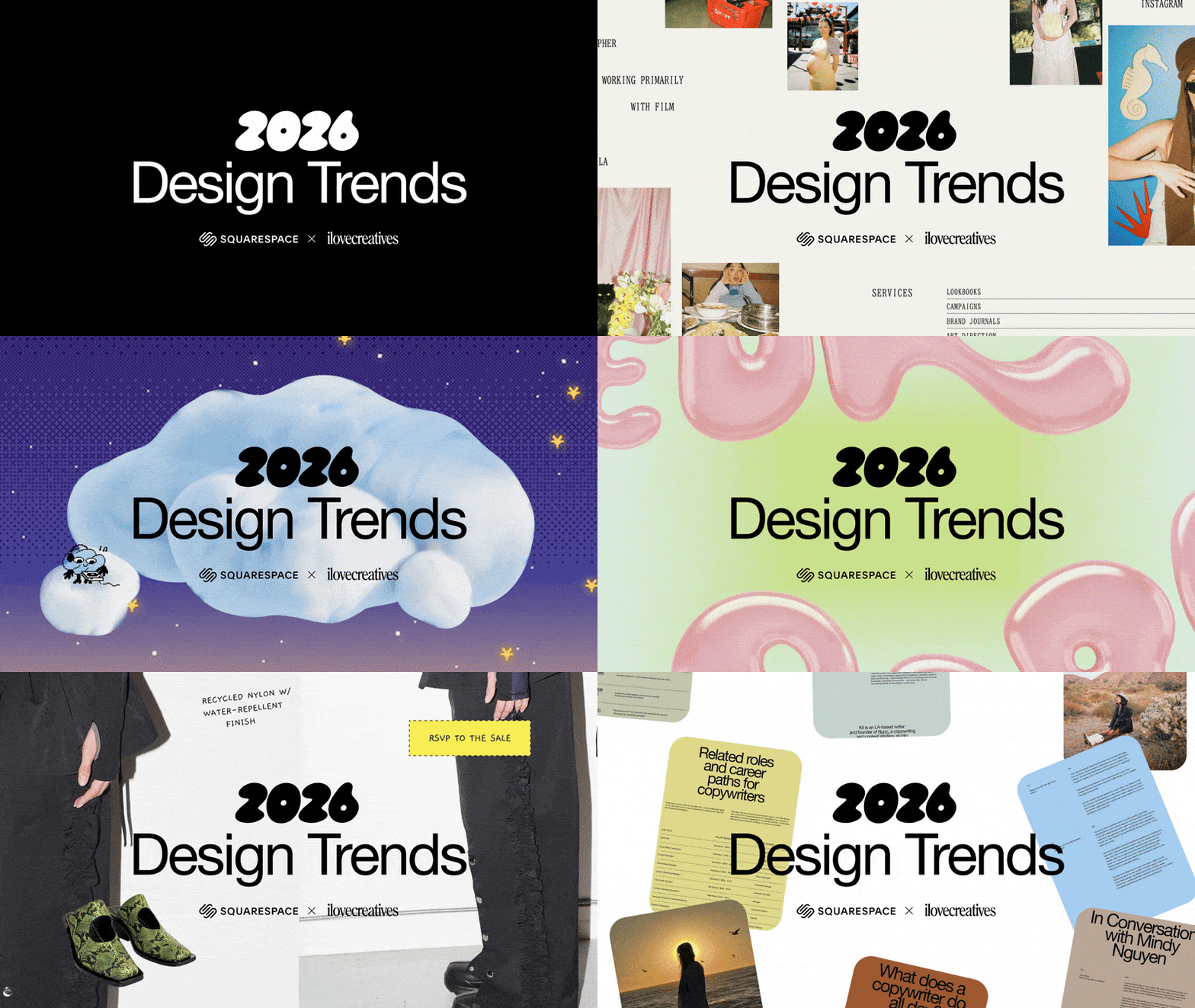
We’re deep in the era of artificial intelligence. With nonstop innovation and increasing adoption, “AI” has become the buzzword of the moment. If your work touches the internet in any way (hello, web design), it’s almost impossible to ignore.
Even as we navigate this seemingly futuristic AI chokehold, 2025 marked a bold swing away from strict minimalism. Design leaned back into personality. Websites embraced character. Color, texture, and a little bit of chaos made their way back onto the page. That shift isn’t slowing down in 2026—it’s ushering in another year where human creativity comes out on top.
This year’s trends feel even more intertwined with the cultural zeitgeist, drawing inspiration from playful online spaces and the once-dismissed world of print marketing. To unpack it all, Squarespace Circle teamed up with longtime Squarespace pro and Circle partner, Puno of ilovecreatives, to reveal the latest and greatest in web design.
Few creatives are as tapped into the now, or as fearless in pushing design forward. In Puno’s case, she’s not just identifying trends; she’s setting them.
Here are 2026’s most prevalent design trends:
Archival Index
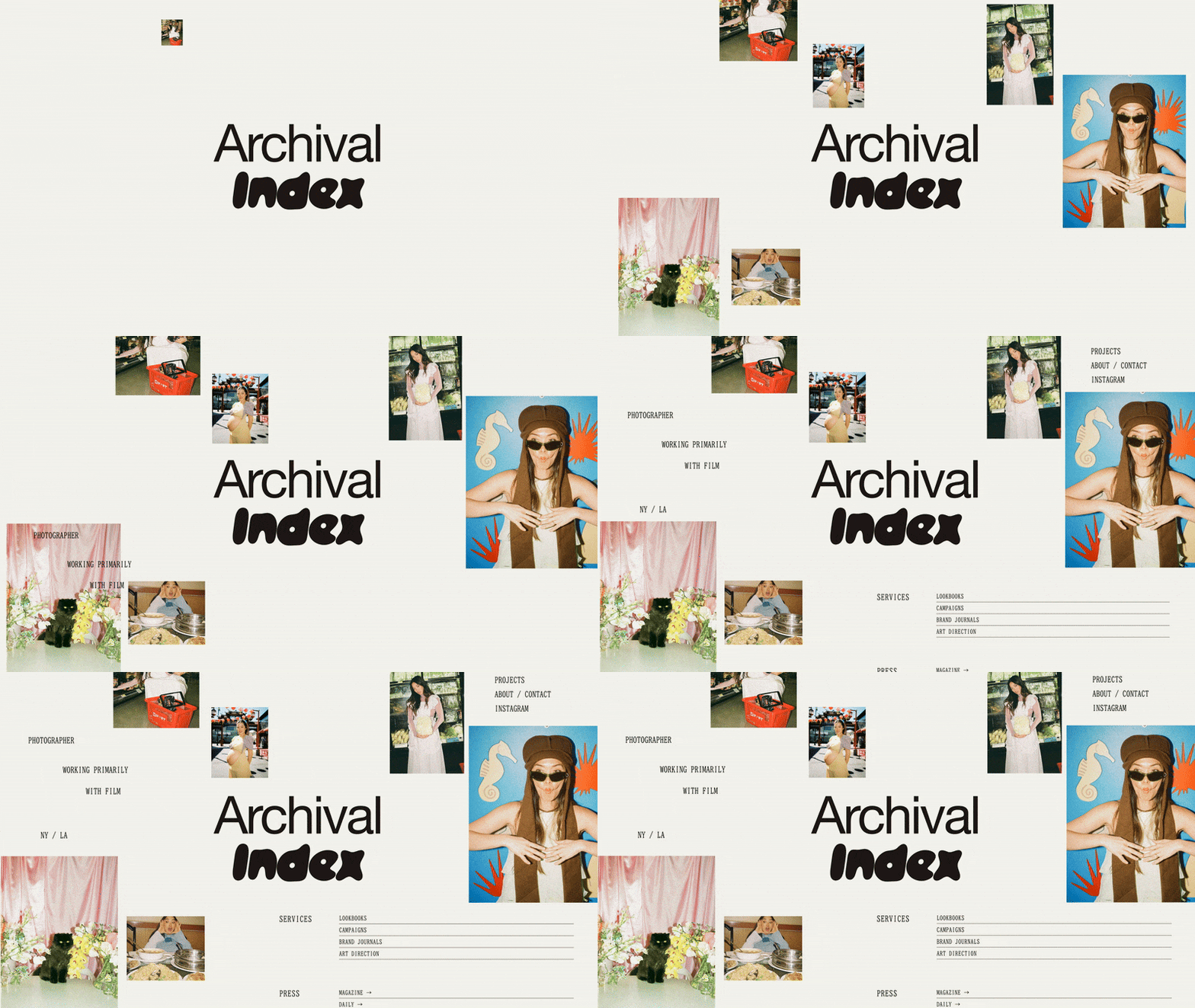
Archival Index is the minimalist designer’s comfort zone in 2026. Archival Index transforms structured data into visual storytelling, taking a nostalgic approach to collecting and archiving information with grids, labels, and annotations. The aesthetic represents a refined take on digital collection and categorization with layouts that feel equal parts library and gallery.
The design framework relies on neutral color palettes, carefully organized layouts, and detailed labeling. It’s direct, structured, and clean, offering comfort in the structure. For copy-forward websites, Archival Index is great for turning documentation into part of the brand’s aesthetic.
Glassmorphism
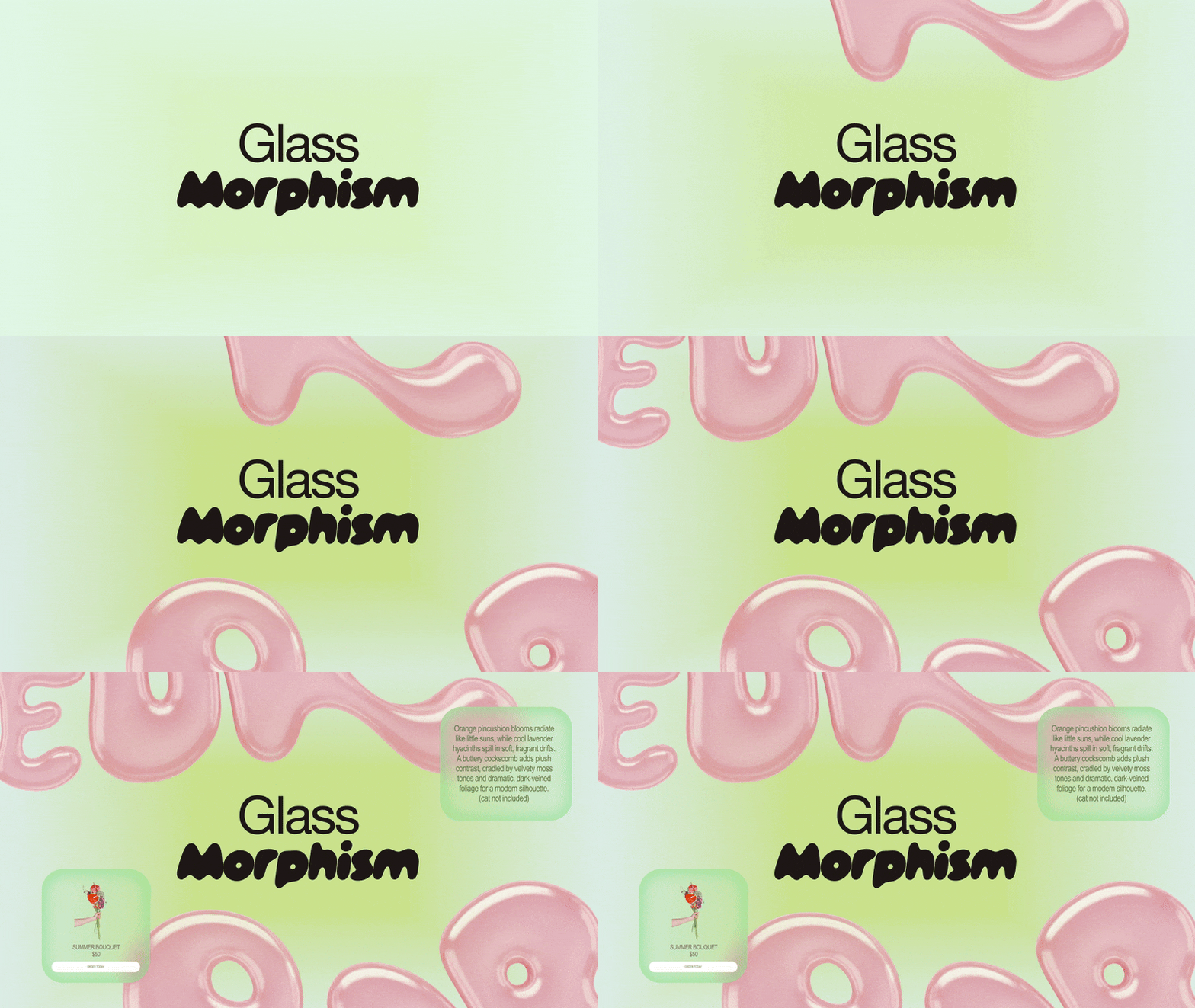
Glassmorphism is the visual framework for an AI-driven future. For designers looking to embrace a cool, delightful aesthetic in 2026, it's the essence of calm futurism. An evolved, refined, and hyper-modern interpretation of digital space, Glassmorphism uses transparent, layered depth with a sheen-like quality to create compositions that feel sleek and commanding.
The aesthetic is both futuristic and fun and can offer a new perspective to existing brands or help define new businesses. With an effervescent cool factor, Glassmorphism has the makings of a visual identity that iterates and evolves over time.
Creative Process
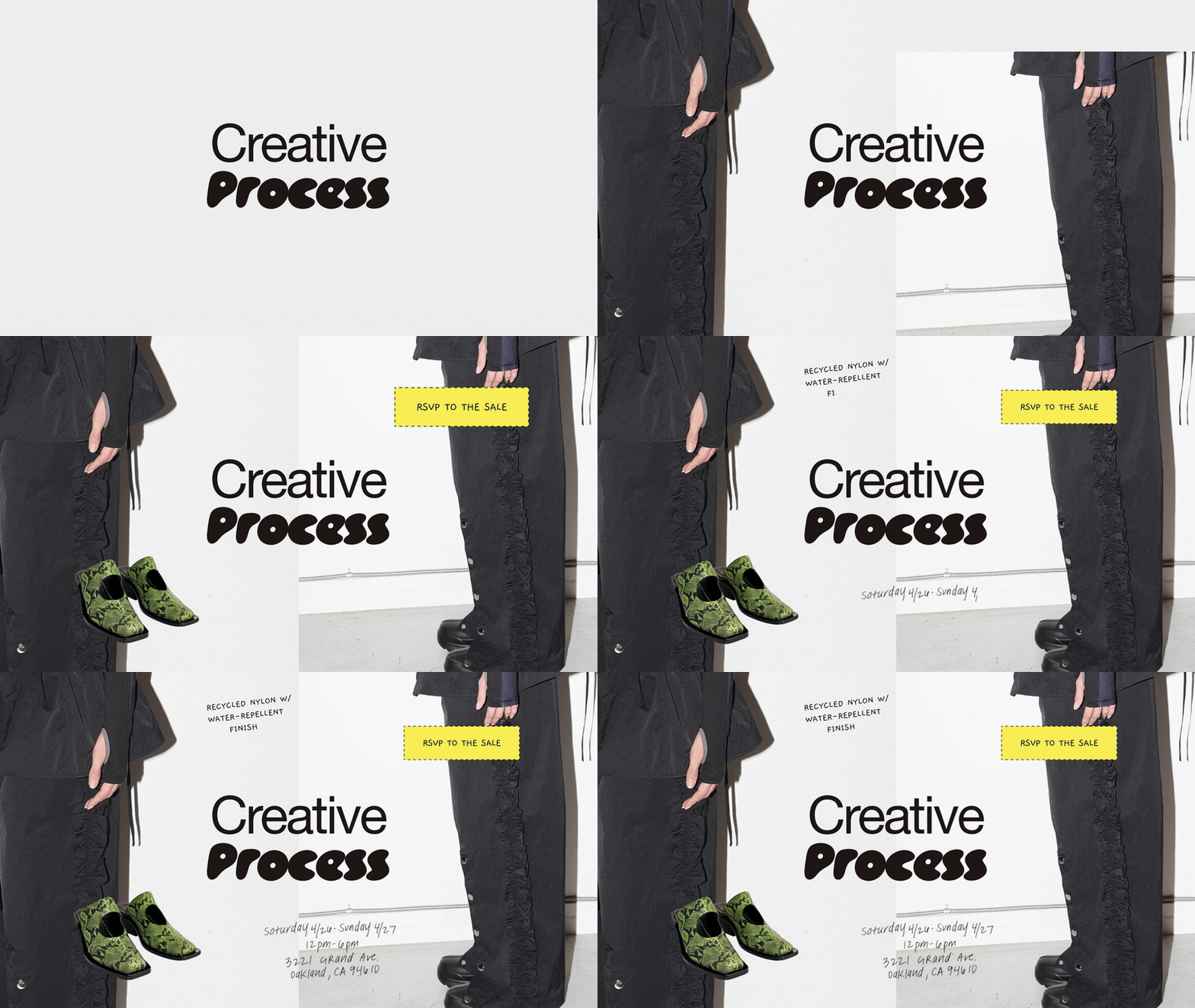
A celebration of process and imperfection, Creative Process rejects digital polish, favoring hand-drawn marks, scanned textures, and collage-style layering. It’s human, intimate, and expressive—the beauty of the unfinished. Like 2025’s Sketchbook, this trend offers an intimate look into the creative journey, fostering an immediate connection to emotion and authenticity.
Creative Process features hand-drawn type and logos, organic scribbles, collaged work-in-progress photos, and intentionally imperfect patterns. In a world where final products are increasingly polished, people crave visibility into how things are made. Creative Process celebrates the nuanced decisions only a human hand can make, building trust and telling the full story in a visual, honest way.
Motion Narrative

Motion Narrative is a kinetic approach to digital storytelling, where intentional, thoughtful movement transforms static pages into living experiences. When done well, Motion Narrative becomes the design itself, feeling like a novel, digital playground that builds rapport with your audience and draws them into your brand.
Motion Narrative is one of the more advanced trends, requiring a solid understanding of user experience (UX) and accessibility to execute successfully. The aesthetic invites you to create tactile brand experiences before a customer ever interacts with the product or service firsthand, adding an element of entertainment that naturally captures and holds the visitor’s attention.
Card Play
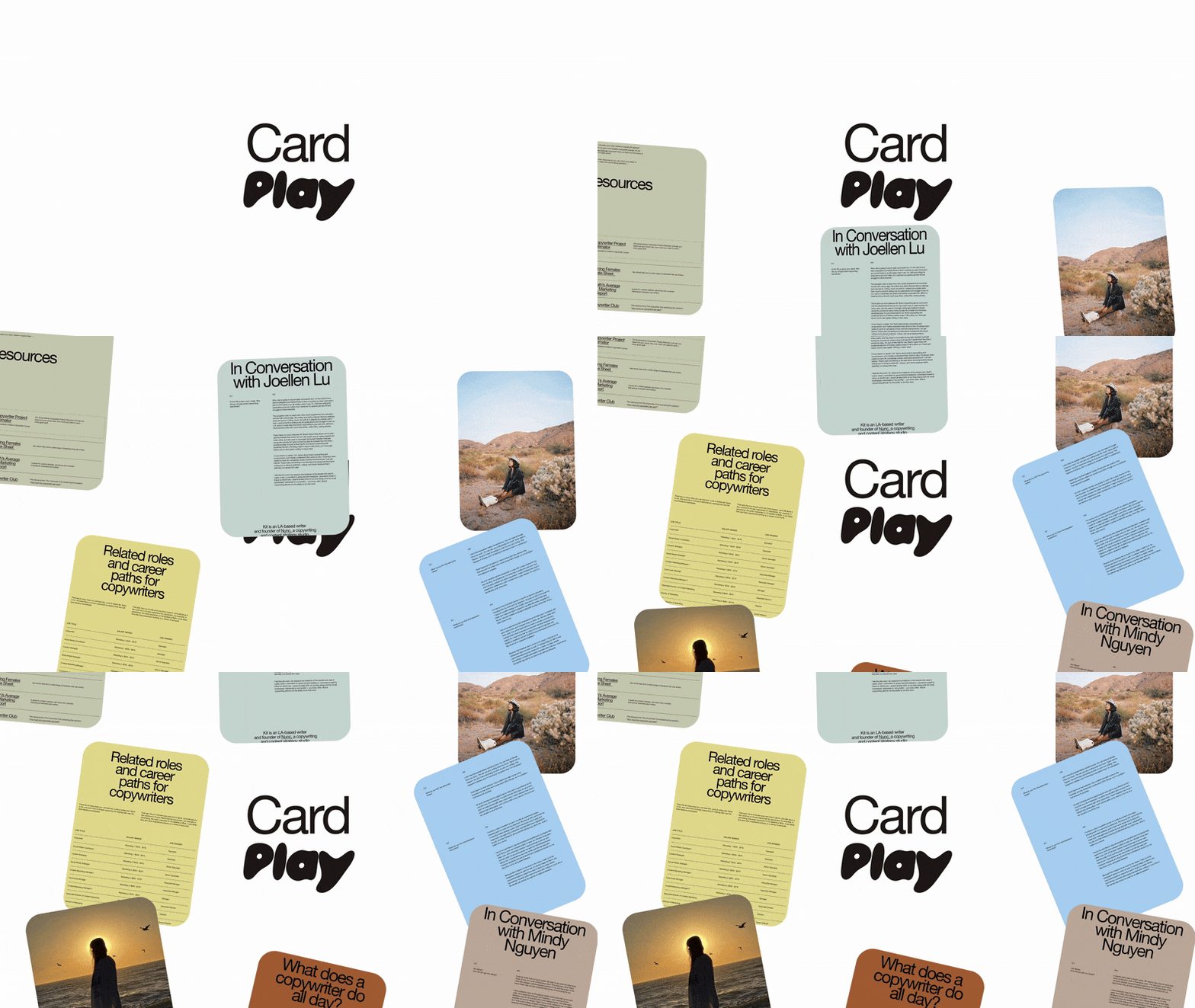
Card Play is an evolution of the grid system that leans into interactive storytelling. For the designer who craves structure, each card becomes a tactical module—pressable, hoverable, or flippable—striking a balance between order and play. Its clean, modular nature also makes Card Play highly palatable and adaptable, fitting seamlessly into a wide range of site types and industries.
Rounded corners and soft edges pair with micro-animations and flips effects reminiscent of cards on a table. Card Play is a fun, intuitive way to organize information and highlight key details like calls-to-action or important notes. Like puzzle pieces clicking into place, the aesthetic demonstrates its value through beautifully partitioned, easy-to-digest content.
Check out more details about these trends and how to apply them on Squarespace:
Which design trend fits your personality best?
Watch our interview with Puno about the trends.
-
Sam: Welcome to another episode of Circle Live. Today we're going to be talking about Design Trends for 2026. We will be speaking with Puno from ilovecreatives about how she developed each one of these Design Trends, and a little about how she works with ilovecreatives.
Sarah: Stick around. You are not going to want to miss this. We're covering how to apply eyeshadow—trust me, it's relevant—how your clients can implement each of these five Design Trends, and, at the end, we'll find out which Design Trend Puno thinks she is.
Sarah: All right. Let's go ahead and get into it. Puno, welcome to Circle Live.
Puno: Oh I'm excited.
Sam: This is going to be so exciting. What a great convo we're gonna have.
Puno: Yeah.
Sam: One thing that I, that I know about you is you are a master of making fun in original videos. And there's a fun and original video that you made as part of this Design Trends rollout. I want to watch that together, and then I want to talk about it.
Puno: Okay.
Puno [pre-recorded]: It's here. I'm here to walk you through the 2026 Design Trends!
Archival Index. Digital collecting turned editorial. I want to clap. How do I clap. You can mix images with tiny labels, understated typography, and catalog information.
Motion Narrative. Where you scroll becomes the storyteller. Pin objects so it looks like objects are moving in space. Where did that book go? And hide layers that you don't want on mobile.
Glassmorphism. Glass textures on sculptural typography. Muted, airy pastels, translucent floating panels. Then gently blur those backgrounds.
Ooo, Creative Process. This is all about celebrating raw human side of things. Hand-drawn tie! That's on sale! Squiggle that price out. The charm comes from sharing a part of the Creative Process.
Card Play! Hello rounded corners. The cards can tilt, overlap. Have fun with it.
Goodbye, 2025. What's that smell? Can’t wait to see what you build!
Sam: Okay, so my first question about this is, you know, some of that has to be—
Puno: I actually haven’t seen that version!
Sam: You haven't seen it yet?
Puno: No, Iike, yeah. I mean, I hadn't seen it completely like that yet. It was so funny.
Sam: I'm glad to debut this to you.
Sarah: Live react.
Puno: Thank you. Sam: What—actually that's great, like what's, what are your reactions? What surprised you? What weren’t you expecting to come out?
Puno: I forgot, like, we put the, I was like we should just put the Sonny Angels thing back in, just, you know, just to, like, it's so quick. I don't even know if a lot of people know. I think most...only women know what Sonny Angels are.
Sam: I know what Sonny Angels are! Sorry!
Puno: Okay, Sarah’s the only one who doesn't know.
Sarah: I only know what Sonny Angels are because we recently hired someone on to our team who's much more culturally plugged in than I am.
Sam: And to be fair, she sits next to me, and that's the only reason I know what's on there on her desk.
Sarah: Shout out, Angela!
Puno: We need those evangelists in our life. Okay, so I was like, but either way, we were just like, let's just keep it in. Because even if someone doesn't know what it is still looking, it's still pretty funny. And I was like, I had to not have clothes on for that.
Sam: Adorable. How? I also want to ask. Just for people who make videos. How much do you plan ahead and how much of it is improv?
Puno: Oh, okay. So I'm going to talk about this one because this was a lot. Because one, we had to figure out, what were the Design Trends? So we went back and forth with Squarespace on it and, you know, just had to figure out like, is this it? And they've also had Design Trends that they've talked about. But actually, interesting enough, we were kind of on the page—the same page about a lot of them, like Archival Index, Glassmorphism.
So it's kind of cool, because, you know, it's a trend, right? So. And then after that, I had to, well me, myself and our team, we had to design five websites. So like.
So it was just, it was a lot. But it was really fun because we got to play around with just all the different features and how do you like, you know, how do you just make it...not templatized, which is like our thing. So that was really fun. And then, then we're like, okay, now how do we talk about this?
And so our process is, we usually just write the real points that we need, the facts, like the things that we have to say. We write that. And then we sit for maybe an hour or two hours and just, like, try to figure out a hook, like the hook is so important. And usually the hook is the running skit throughout the whole thing.
And then while we're doing it, there's enough jokes on the table to be like, yeah, that's funny. So we try those and then we improv. The rest of it.
Sam: Are the jokes that are on the table, just like, rejected hooks?
Puno: Yes.
Sam: Yeah. I love that. I mean, I love that that's one of the great things about the creative process is that you reject something, but it always comes back.
Puno: It always comes back. It was so funny because we had all sorts of ones that were just like, this doesn't make any sense. But like this, this, Labubu-esque kind of bear with Sonny Angels, like that is 2025 in a nutshell? You know?
Sam: For sure. Should we get into the trends?
Sarah: Yeah!
Sam: I hate to be the trend police, but I do want to talk about these.
Puno: Absolutely! No, it's fun. I, okay, let's, so Archival Index is the first one. This one is, you know, it's a lot of, like, basically digital collecting turned editorial. It's grids. It's, you know, understated typography, muted color palettes. Like, there's, like footnotes everywhere. And we're seeing it a lot in general, like in the design world.
But I'm now seeing it too, like, getting a little bit more in other websites and other places. So, portfolios are great for it. But yeah, I feel like, have you guys been seeing some Archival Index kind of sites?
Sam: Absolutely. What this makes me think of is just being a kid of the 90s and stumbling on, like, a lot of, a lot of those websites were just like a list of things. It was just like it was literally just. And I actually really like that now. There's, there's a website I, have just been getting into called SCP.
It's this wiki collaborative project between a bunch of people. They're like, they're creating like a fictional universe together. And there's something very comforting about, like, knowing that there's just so much creative content that is all words. It's all text. And there's occasionally visuals, but it's like, mainly just like lists, exactly like this. It's like it's comforting in a way.
Puno: I love that you referenced the 90s because, like, that's all we could do. You know, all we had was Yahoo and navigation-based websites. So all you saw were lists and lists of links, which is, you know, it's like, we're kind of coming back to that too. We're, now we're, we're like literally archiving our work. We're archiving what we're seeing.
I'm just seeing so many people, like, making personal websites that are just documenting their journey on the internet, because there's adaptive responsiveness with mobile. It's really, like, you can have those, like, you can mix media in in a way where you can have, like, images with these footnotes. But then you can also have these grids. And then, once it goes into mobile, it won't lose itself, you know, and it it all comes into place.
And I think it's like, yeah, it's just it was actually, that was really simple to build on Squarespace.
Sam: One of the things that I love about this next trend, Glassmorphism, is it gives a completely different perspective on something familiar. You're, like, going over this familiar logo. Oh, no, it's it's like a funhouse mirror.
Puno: This is definitely a hypermodern interpretation of, of the digital space. We were saying when we look at this, it feels like calm futurism. There's a lot of transparent, like, layered depth. There's, a lot of, like, translucent layers, like I use these panels. I even made the, the logo glass that, actually that logo was like more 3D, like, matte kind of ceramic texture.
And now—and having it in a glass texture was nice. And then also this, like, sculptural, kind of, like, oblongy typography. That was a really fun pairing because typically Glassmorphism is very like, Apple, you know, UI, and I liked, it was fun to like, play around with it and see what our take would be on Glassmorphism.
But I think, though, my favorite part of Glassmorphism is, like, there's a lot of soft blurring backgrounds, like we use a lot of gradients in ilovecreatives, and I would always be so, like, annoyed by our gradients. I just got over them. I was like, like seeing the same, just, bleh gradient. And this was like, it was a very nice, healthy exploration of, how can we do gradients differently?
It was, like, a lot of subtle layers. Lots and lots and lots of subtle layers, lots of, like, 20% solid backgrounds on top of each other. And I was even thinking, like, ooh, now that you can do layering, I didn't get to do this on the website, but now that you can do layering on Squarespace, like it'd be very interesting once animations come in to like, have, like, 20 layers of transparent colors and see, like, what does that look like on a website?
I feel like there's a lot of fun stuff you can do there. But um, but yeah, Glassmorphism, this is, I'm going to, I think we're going to see a lot of that this 2026.
Sam: And such a contrast from Archival Index where you're really using some advanced skills to create this visual tactile experience for people on the site.
Puno: You think? It's like, it's, I don't know! I feel like it's, okay. Maybe it maybe, so, like, breaking it down, like breaking down an actual panel. It's rounded corners, but it's just, like, lots of shadows. If you've ever done makeup, Sam, it's like when you finally learn how to do, put on eyeshadow. You're basically, like, you, you have to make sure your eyeshadow is barely on.
You tap-tap-tap the brush. It's like so barely on. And then you're just sitting there, like, just, like, not putting anything on at all. Anyways, that's what I think of Glassmorphism. It's literally, like, put nothingness on nothingness until you get just barely nothingness.
Sam: Well, that's not how I put on eyeshadow. It’s, it's not my, my technique is just as much as, maximalism, but I guess I'm attracting a different crowd than you are.
Sarah: Puno, I have a meta question for you. I'm curious, why do you think we like this trend? Why is it, like, pleasing to the eye?
Puno: Everybody wants a little bit of space right now and clean and, like, the internet is, is, like, news and lots of just stuff, like, flying at you. And I feel like this is just a breath of fresh air. It's, like, very, it feels hopeful. It feels calm. And future right now doesn’t feel that great for some people.
So, the, the brands that I've seen it with, like one of my friends, they own a brand called OEM and, granted, they did this Glassmorphism approach a long time ago. But they're, they're, making, like, the new CVS, if you will. And it's like, oh, I love that. You know, like, being able to go to a drug store and, you know, and it's beautiful and futuristic like this and calming, and, yeah, I think that's like people just want, we're done with, like, the commercialization of things in that sense.
Like, we want something that just feels hopeful.
Sarah: I find the, like, transparency of it so interesting because I feel like, you know, in the world where it's now like, is that AI, is that a bot, like, I don't know, like this, the visual representation of the desire that we have for transparency, I feel like is manifested in, in this template.
Puno: Oh that's deep. Yeah. No, that's a great observation.
Sam: I actually, not to move us ahead too quickly, but I, I actually think that's an interesting point to kind of contrast with the transparency of Creative Process, the, the next trend, which is also kind of about transparency, not in the literal way, but it's like, we're showing you what we're doing. We're showing you behind the scenes that maybe that is something that combines both of these trends or connects both of these trends is people are looking for something real, something to dive into.
Puno: To your point, like, it's just so much more real to, and raw to show the human side of making something without feeling “maker”, you know? Like, there was that maker moment and that's like, not really what's going on now, but, this is, like, another version of that.
Sam: It isn't just as easy as showing what you're doing, showing people a raw video. It does take some forethought and some storytelling to, to, to eventually get to the place where you can show something that's engaging. Would you agree with that?
Puno: Absolutely. Yeah. That's where that unpolished, polished part of it happens. Like, when we were first making the ilovecreatives brand, it was, like, so important that we were not, that we were approachable and that people, because people need to feel inspired enough to want to learn from us, but not, like, isolated or feeling like we're too good for them, like we're, you know, some superior brand and they would never be able to do this or do what, it's like, we didn't want to overinspire them.
So it was always so important to, like, get it there, but then just, like, lean into the unpolishedness. And I am just like that because I never went to design school, I never was traditionally trained or anything like that. And I grew up on the internet, so, like, I don't really know about prints that much, so, I'm just messy in nature and I'm just like, you know, just, like, I think that's why it just happens very naturally for for me.
Sarah: For people who want to implement this trend for a client, how would you start thinking about whether it's, like, behind the scenes or the process, how do you start thinking about, like, what you reveal, to, to their, to their customers?
Puno: I mean, I think it's just, how much you want to reveal. I love Cara because Cara is the founder of Keiko, and she's just like, I pulled most of this from her Instagram. She's just like this. She will sew, instead of a flier where she'll put graphics, she's sew a flier. Like, she’ll sew the typography on to a flier, like she's just already doing that.
Someone just needs to take a picture of it, you know, like, it's, most of these people who are, like, making these objects are ridiculously creative, ridiculously talented. If you're just in there and you're the, you know, you're you're, literally just you're docu-, you’re like a documentary person, like, you're just documenting what they're already doing. And I think that's the cool thing about being a Squarespace freelancer-designer is you really get to gas people up, you know, like you get to be like, here, I got to find the cool thing about you, or I've got to find that special thing about you.
And once I do, I'm going to, like, build your confidence up because, like, it's really cool. And I'm going to show you how cool it is because I'm going to lay it out on this website so all these people can see.
Sam: So with Motion Narrative, how do we keep this from being too much? How do we keep it intentional?
Puno: Really, this is more about leaning into rounded corners, and like, we're seeing this, you know, we saw this a little bit in Glassmorphism. But basically rounded corners are the new sharp corners. And it's, I think what's cool about it is it's thinking of, like, old-school games. Solitaire, anybody?
Sam: 100%, 100% agree.
Puno: You saw that, right? Because I was just, like, this is, this is, instead of the grid now, the cards are the visual hierarchy, which is really cool. So, yeah, you're going to see it a lot more. You're going to see a lot more animation with it. You're going to see a lot more interactiveness with cards. But yeah, I feel like people are just going to learn to be like 30-50 radius, 10-20.
They're going to learn what kind of radius you are in this, in 2026.
Sam: And with block transforms, getting to work with those, I think this is going to make this so much easier for people to play around with. I think, block transforms, I have a lot of fun playing around with them, and I think that that's like gonna really play into this particular trend. Like, I love that you brought up solitaire because like, I think that that's just maybe another 90s kid thing where it's like I'm thinking, like, like there's something that's so satisfying about an organizational structure like this.
It also makes me think of like the bento boxes you see with product releases where it's like, this is a great way to showcase maybe digital products that you're selling online because it makes them feel like physical products, in a way. It makes them a little bit more palatable for the average internet visitor.
Puno: Sam, were you on, was he on the email chain? Because originally this was called Bento Box, like that was the original version of it. But then we went to Card Play. But, yeah, absolutely. Oh my gosh. Subscribe!
Sarah: I love the card as, like, an invitation. Like, pulling you in. It kind of feels like a first impression in a way. Like, who, who are you presenting yourself to be on the outside. And then how are you, like, inviting people, into that?
Puno: It's like, it's not. I think it's just more playful, you know, because we, like, as web designers, we have to just constantly frame things. We have to, like, put other content in things and shapes and blah, blah, blah. And so it's like, you know, last year it was about putting them in flowers and putting them in different kinds of design shapes. But now it's like, okay, what if they're all of bit uniform but still playful? So yeah, it's it's it's fun, it’s bento.
Sam: Final trend?
Sarah: Final trend.
Puno: Final trend.
Sam: Final trend…
Puno: I love that you left this one for last.
Sam: Because this is actually my favorite, if I'm, if I'm perfectly honest.
Sarah: Okay, we won't tell the other ones.
Sam: Don't tell the other ones. Okay, Motion Narrative. I think I just really like the title that it just kind of is, like, it's, I don't it just makes me think of, like, like, animated movies, you know, like, like Nightmare Before Christmas, you know, just like, like, stuff that, like, shouldn't be moving is now moving and that just delights me.
Sarah: I feel like your interpretation of it was more sinister. I was like, this reminds me of like a school line leader, like, who's getting us somewhere, you know, leading the pack.
Sam: No, I'm just thinking about, like, you know, like in, in, like a Tim Burton movie. There's always, like, the hill that you don't think is going to do anything. And then all of a sudden it's, like, uncurling and you're like, why is a hill moving right now? But it's kind of fun. It's like I immediately watch that, you know?
Puno: Yeah, I, I love this because, it reminds me of 2006 when Flash websites, Flash microsites were all the rage and they would pay agencies to make these ridiculous Motion Narrative websites that were just, scroll and like, you're gonna see a little bear eat Doritos, like, you know, just whatever you want. That was such a fun, playful era.
And I think we're getting back to it because people just didn't want to learn JavaScript to do this. But now we have the tools to and I, oh my gosh, I want to like really pick apart this website because we had a lot of fun making it. This is a book that I wrote for Frankie when she was one, and I haven't, because I had a second child, I hadn't had time to launch it until, like, it's literally launching this year.
So hopefully by the end of this year. But, I was really glad that we got to do this because I was like, I might as well just make the website for the book. So we already had all of these animations and GIFs. Because it's part of the book, but we use the layering so that, you know, like you can see here that the cloud is in front of it.
And then also this GIF is transparent. So you also get to see the logo in the background. And then, oh my gosh, we used, Casey helped me with this one. We used block—shape blocks. And there's a seam right here, but it's not intense because we put like a shaded purple shape block here.
Sam: No, that looks like it's, that looks like it's totally intentional. Like, because it it works. It just works.
Puno: It works, right? It looks kind of like it’s. So then, when you go here, it's like, oh, the cloud, there's the book. So then here's the book, it's coming out, and then bye bye book. And then we have the logo again and it lands on by the book. Oh wow. And then you've got all your little dudes here.
And then my favorite part is when you go to mobile, it's all, this is such a funny way to show mobile, but, yeah, it's all there.
Sarah: Puno, is all of this functionality native to Squarespace?
Puno: Everything is native.
Sarah: Wow. I feel like if we had a live studio audience, they'd be clapping.
Sam: We clap for ourselves.
Puno: I’m so excited.
Sam: I would just be so overwhelmed. by the options, and I would be so nervous about overdoing it. How do you, like, this looks so clean, and it looks so intentional. How do you keep it from being too much?
Puno: Deadlines. I'm not even going to lie. Like, okay, we had, so, to get to your point though, when we first started this, we had started with the prototype first because we had most of the assets, but we didn't even design anything. There was no website really created. We had a little bit of a prototype of an old website that we were thinking of, but we just, we didn't do the website first.
The first thing we did was just use blocks in, like, random things to just see what's, what is capable. And then I was like, oh my gosh, I have to, like, record this tomorrow. So we just need to pick something. So that's when it was just like decision, decision, decision. And then yeah, and then it was done. But truly, deadlines.
That's how it always, that's how it forces my hand, so.
Sam: Deadlines are your best friend.
Puno: Yeah, honestly.
Sarah: I feel like generally, like, in, in the times where I've built a website, like, I feel like you can tell when it feels, like, still and like, needs to come alive a little bit more, and then you, you awaken it too much and then you're like, we need to tone it down a little bit. Maybe it's like a gut check with a friend, like, is my alive the same as your alive or, like, have, have we gone too far? You know, and a deadline.
Puno: And a deadline. Yeah. I, when we were going through it, it was absolutely too much in the beginning. Like, it was definitely like, there's a lot of ideas here. And, I also feel like mobile helps, too, because it really does force you to be like, this is long. Like, I'm not going to scroll. I mean, maybe I would? Is it? I don’t know. Just being a little honest with yourself about, like, what do you think you would actually want to do?
Because originally we were like, six sections. Eight sections? What's wrong with scrolling through eight sections? But three, three was quite enough.
Sarah: I feel like the uploading of the gif is super understated, like, I don't feel like I see people do that often, but you can be so creative about it.
Puno: Yeah, I mean, I'm also working with very creative illustrators.
So you can, you can source out some of that, some of that work. You can find people to do these things. And I think that that's, that's part of surrounding yourself with creative people, which is clearly one of the keys to your success.
Puno: If you do creative stuff, people will want to like, play with you too. If you play—
Sarah: Card Play!
Puno: Someone will want to play with you too. Card Play!
Speaking of play, Puno…we're going to end with a little, a little game. Sam.
Sam: Oh yeah. So, we, everybody will have access to a Design Trends quiz as they have in previous years to find out which of these trends that they are. Before we have you take the quiz though, Puno, I'm curious, having worked in all these trends and having designed sites in them and knowing the backwards and forwards, which trend do you think you are?
Creative Process. But I want to be Scroll Motion [Motion Narrative]. I want to move, I want to do them all! I’d honestly put them all together. I'm a slashie.
Sam: As, as we say in our team, you can have a sun, a moon, and a rising. Yeah, if you want to do sun, moon, rising, you can.
Puno: Okay. My sun, then, is for sure Creative Process. My moon is Glassmorphism. And then my rising is absolutely Motion Narrative.
Sarah: So good.
Sam: Yeah.
Sarah: Well, I can't wait to test that against the real quiz. And we'll see how well you really know yourself.
Puno: She got—
Sarah: Puno, this was so much fun.
Sam: This was so much fun. Thanks, Puno, for, thanks for coming, playing with us. It's always a delight.
Sarah: Yeah, incredible playdate. We loved having you. And, yeah, our mom will call your mom, and we'll set it up again sometime soon.
Puno: Awesome. I'll bring snacks.
Sarah: Okay. Thanks, Puno. Bye!
Puno: Bye!
Want more?
Check out Squarespace Circle, Squarespace’s program for professional designers and web design agencies. Along with exclusive content, discounts, and other perks, Circle brings experts together from across the globe to exchange advice while connecting with new clients and collaborators.
